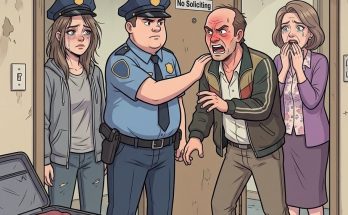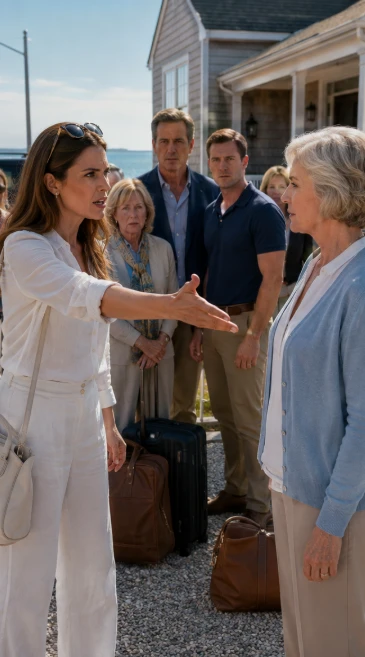
Four hours after I became the owner of my dream beach cottage, my daughter-in-law ordered me to turn it into a free luxury retreat for twenty-two people.
She expected me to object.
Then apologize.
Then give in.
Instead, I looked at the brass key in my hand and gave her the answer she had heard from me for years.
“Of course.”
Brooke relaxed immediately.
That was her first mistake.
For years, she had watched me change restaurant reservations because she disliked the menu.
I surrendered holidays when her parents had “more complicated schedules.”
I remained quiet when she introduced me as Bradley’s sweet little mother who never caused trouble.
She had mistaken patience for helplessness.
Kindness for permission.
And silence for agreement.
But standing inside the Cape Cod cottage I had spent eight years saving for, I was not surrendering.
I was thinking.
1. THE HOUSE HAROLD SAID I WOULD NEVER OWN
My name is Dorothy Mae Hale.
For thirty-two years, I worked as a librarian.
People imagine librarians shelving books and asking children to whisper.
They rarely think about the other skills involved.
Research.
Records.
Contradictions.
Missing documents.
Dates that do not match.
Pages that appear where they should not.
A library is not only a place filled with stories.
It is a place filled with evidence.
I began working at the Eastham Public Library when Bradley was six.
My marriage to his father, Harold, was already failing.
Harold had a talent for making every ambition I expressed sound unrealistic.
He controlled most financial decisions.
He corrected me publicly.
He laughed at ideas that did not originate with him.
When I mentioned taking archival-science classes, he asked who I was trying to impress.
When I suggested repainting the kitchen, he called it another one of my “expensive fantasies.”
And when I first mentioned owning a beach cottage someday, Harold laughed.
“A beach cottage? With what money?”
“I can save.”
He looked toward thirteen-year-old Bradley.
“Your mother will still be chasing that fantasy when she’s ninety.”
Bradley stared at his plate.
I remembered that moment for years.
I divorced Harold four years later.
He kept the larger house and most of the financial comfort we had built.
I kept my job.
A modest apartment.
And one private promise.
Someday I would own a small place by the ocean.
For eight years, I saved.
Extra library work.
Private cataloguing jobs.
No major vacations.
The same faded Honda.
Every month, I transferred something into an account labeled:
ATLANTIC
Sometimes thirty dollars.
Sometimes three hundred.
Once four thousand.
Eventually, I found Blue Heron Cottage.
Two bedrooms.
Faded blue shutters.
Weathered cedar shingles.
A small kitchen.
A slightly uneven upstairs floor.
A deck overlooking the Atlantic.
It was perfect.
At closing, the attorney slid the papers toward me.
“Congratulations, Mrs. Hale.”
I signed:
Dorothy Mae Hale.
Not Harold.
Not Bradley.
Not anyone else.
Mine.
The attorney gave me two brass keys and a blue folder containing the deed, survey and historical property records.
I drove there alone.
For an hour, I walked from room to room.
Books beneath the windows.
A yellow blanket over the sofa.
Coffee on the deck.
Perhaps Bradley would visit.
Perhaps my grandchildren would build sandcastles.
Then Brooke called.
“Change of plans,” she announced.
No hello.
No congratulations.
“We’re not helping you move tomorrow. Bradley landed the Westfield account, so we’re celebrating at your place.”
I looked around my empty living room.
“At my place?”
“Yes. Clean the rooms, prepare food and make space for twenty-two people. Everyone is already planning around it.”
I thought I had misunderstood.
“Brooke, this house has two bedrooms.”
“People can use air mattresses. There’s a deck, right?”
“Yes, but—”
“We’ll need dinner, breakfast and a nice lunch tomorrow. Nothing too heavy.”
Then she added:
“And please don’t make one of your casseroles.”
I sat on the window seat.
“You invited twenty-two people to a house I purchased today?”
“This is important for Bradley’s career. You wouldn’t want to complicate that.”
There it was.
The same argument she had used for years.
Bradley needed encouragement.
Bradley needed peace.
Bradley had stress.
Bradley’s career mattered.
And somehow the sacrifice always became mine.
Once, I would have driven to three stores buying sheets, food, towels and air mattresses.
Instead, I looked at my new brass key.
“Of course,” I said. “I’ll make sure everything is ready.”
“Perfect.”
She disconnected.
I called Bradley.
“Brooke says twenty-two people are coming to my cottage.”
He gave a nervous laugh.
“Isn’t it great? She thought it would be perfect.”
“When did you ask me?”
Silence.
“Mom, please. The Westfield account could change everything for me.”
“Did you tell Brooke she could use my house?”
“I said you’d probably be happy to celebrate.”
“That is not what I asked.”
“Can we please not turn this into a conflict?”
I closed my eyes.
Harold had used different words, but the lesson was familiar.
Let the most forceful person decide.
Ask Dorothy to make it easier.
“It’s fine,” I said quietly. “I’ll handle everything.”
Bradley relaxed.
“I knew you’d understand.”
I did.
Finally.
After we hung up, I opened my laptop.
2. WHAT LIBRARIANS KNOW
I started with Jonathan and Diana Westfield.
Jonathan ran a major investment company.
Diana managed a foundation involved in conservation, affordable housing and historic preservation.
Everything I found suggested that they valued privacy.
That made Brooke’s story odd.
Why would people known for avoiding extravagant social events agree to spend a weekend on air mattresses inside a stranger’s two-bedroom cottage?
Then I researched Bradley’s firm.
Hale, Morrison and Burke handled development consulting, environmental permitting and property negotiations.
The Westfield account involved land near Wellfleet.
One planning document mentioned:
A sixty-four-acre coastal parcel adjacent to Blue Heron Lane.
I sat straighter.
My cottage was on Blue Heron Lane.
I opened the blue closing folder.
Along one side of my survey was a narrow strip marked:
Pike Access Way — Status Disputed
I searched town archives.
Eleven years earlier, a proposed development had stalled because the sixty-four-acre parcel had no established vehicle access.
One possible route crossed the strip beside my cottage.
Then I found Brooke’s social-media post.
She had uploaded the real-estate photograph of my cottage before my closing.
Her caption:
Celebrating Bradley’s biggest professional victory yet at our new Cape retreat!
Our.
New.
Retreat.
One comment asked whether the “signing ceremony” would happen before dinner.
Signing ceremony?
I searched town records connected to my address.
A gathering application had been filed two days before I legally owned the house.
Applicant:
Dorothy M. Hale
Attendance:
Twenty-five.
Purpose:
Private corporate hospitality and executive document signing.
The signature resembled mine.
It was not mine.
I downloaded the file.
Attached was a proposed access acknowledgment stating that I intended to allow access across my property.
Then I found the clause that mattered.
What began as temporary access could later become a ninety-nine-year easement after additional review.
The stated initial consideration was ten dollars.
Brooke had not organized a spontaneous celebration.
She had prepared documents before I owned the cottage.
She expected twenty-two people to surround me while paperwork was presented.
Senior partners.
Clients.
Family.
Friends.
All of them watching while Bradley’s future supposedly depended on my cooperation.
It was social pressure disguised as hospitality.
So I made calls.
My friend Meredith contacted Naomi Bell at the town clerk’s office.
My closing attorney, Martin Vale, agreed to come.
Two conservation officials would attend.
A rental company delivered twenty-two folding chairs.
A local market prepared chowder, bread, fruit and coffee.
Then I used the library printer.
Twenty-five packets.
The cover read:
WELCOME TO BLUE HERON COTTAGE
PRIVATE PROPERTY STATUS AND COASTAL ACCESS REVIEW
Inside:
Proof that I was the sole owner.
Brooke’s “our new Cape retreat” post.
The gathering application filed under my name.
The ninety-nine-year easement.
The real survey.
Relevant town procedures.
And one final page:
NO PROPERTY DOCUMENT WILL BE SIGNED TODAY.
Lunch, however, would still be served.
Meredith read the packet the next morning.
“You’ve been underestimated for a long time.”
“Yes.”
“Are you afraid?”
I considered pretending otherwise.
“Yes.”
She covered my hand.
“Then you understand what matters.”
At 11:47, the first black SUV entered my driveway.
3. THE WELCOME PACKET
Brooke stepped out wearing white linen trousers and oversized sunglasses.
Bradley followed with champagne.
Then came the Westfields.
Senior partners.
Brooke’s parents, Richard and Elaine.
Friends.
Public-relations people.
Weekend bags.
Coolers.
Flowers.
Wine.
Twenty-two guests arrived as though the cottage had already been offered to them.
Brooke approached me.
“Great. Where should everyone put their things?”
I smiled.
Then handed her the packet.
She read the first line.
Her smile disappeared.
“What is this?”
Jonathan Westfield looked over her shoulder.
Bradley stepped closer.
Then three more cars entered the driveway.
Meredith.
Naomi Bell.
Two conservation officials.
Martin Vale.
Brooke slowly lowered the packet.
“Why are they here?”
Naomi answered.
“Mrs. Hale asked us to review an application submitted using her name.”
Jonathan looked at Brooke.
“What application?”
“It’s a technical issue.”
He continued reading.
Bradley reached the easement page.
“What is this?”
“A preliminary document.”
“Why does it have Mom’s name?”
“We needed paperwork prepared before the weekend.”
“You submitted something for her?”
“It was administrative.”
Naomi remained calm.
“Submitting an application under another property owner’s identity is not an administrative shortcut.”
Brooke immediately blamed an assistant.
I asked which assistant.
She could not name one.
Then I reminded her that the application had been sent from her personal email.
Her father, Richard, stepped forward.
“Dorothy, perhaps this should be discussed privately.”
“No.”
The word surprised even me.
He smiled tightly.
“These are complicated commercial matters.”
“They involve my name and my land.”
One of Bradley’s senior partners took the packet.
“Bradley, did you authorize this?”
“No.”
Brooke turned toward him.
“We discussed the access issue.”
“We discussed whether Mom might consider it.”
“You said she never refuses you.”
Silence.
Bradley stared at his wife.
Brooke had said aloud what everyone else had assumed.
I would give in because I always did.
Diana Westfield looked at Brooke.
“You told us Dorothy had offered to host.”
“She agreed.”
“I purchased this house yesterday,” I said.
Brooke interrupted.
“She agreed when I called.”
“After you filed the application.”
Brooke said nothing.
Jonathan looked toward Bradley’s senior partner.
“I was told Mrs. Hale wanted to participate in access negotiations.”
“So was I,” the partner replied.
Bradley placed the champagne on the ground.
“What exactly did you tell everyone?”
Brooke’s composure finally shifted.
“I created an opportunity.”
“Using my mother’s name?”
“I knew she would agree.”
“You never asked her.”
“Because she asks questions. She needs time. We didn’t have time.”
Jonathan’s voice became quieter.
“Why didn’t you have time?”
Brooke looked briefly toward her father.
Richard answered.
“Establishing access would demonstrate progress on the acquisition.”
That was when I understood that Brooke’s plan reached beyond Bradley’s career.
So I pointed toward the chairs.
“You were invited here under circumstances I did not approve. I apologize for the inconvenience. Nobody will be staying overnight, and there will be no private signing.”
Several guests looked uncomfortable.
“Lunch is ready. The conservation commission has agreed to explain the access dispute. Mr. Vale will review the property records. Anyone who prefers to leave may do so.”
Jonathan looked toward the chairs.
“I’m staying.”
Diana nodded.
“So am I.”
Bradley’s senior partner placed his bag beside the car.
“I think we need to hear this.”
Brooke stared at them.
Diana lifted the packet.
“This is the first document today that clearly identifies what everyone is being asked to consider.”
4. THE TEN-DOLLAR ROAD
Martin placed an enlarged survey on an easel.
“The blue boundary is Mrs. Hale’s property. The yellow section is the disputed Pike Access Way.”
Jonathan frowned.
“Our consultants said access discussions were nearly complete.”
Bradley shook his head.
“My original report said title review was still required.”
His senior partner looked at him.
“Then why did the version provided to the client say family consent had been obtained?”
Bradley turned toward Brooke.
She crossed her legs.
“I clarified the opportunity.”
“You altered the report?”
“I improved weak language.”
“What did Bradley’s version say?”
“That nobody had established a valid right to cross the Pike strip.”
“And the revised version?”
“That family approval had been secured.”
Everyone looked at me.
I held up the acknowledgment carrying my name.
“This was apparently the approval.”
Then another issue surfaced.
Naomi pointed to an advisory participant:
Thompson Coastal Holdings
Jonathan looked at Richard.
“You told me your company had no financial interest.”
“It holds no title.”
“That was not my question.”
Diana asked:
“Would you benefit if commercial access became available?”
Richard hesitated.
Eventually he admitted that early investors could receive substantial compensation.
“How much?”
“Potentially around eight million.”
Bradley stared at him.
“Eight million?”
Then Brooke spoke too quickly.
“You told me four.”
The silence that followed answered more questions than any presentation could.
Bradley turned toward her.
“You knew?”
“It was an investment.”
“You told me this was about my promotion.”
“It was about our future.”
“Whose future?”
“Ours.”
Bradley looked at the paperwork.
“You put my career into the middle of this without telling me what you were doing.”
“I was helping you accomplish something.”
That sentence told me a great deal about Brooke.
She viewed caution as weakness.
Questions as delay.
Boundaries as obstacles.
Martin then pointed out another problem.
The easement was not simply permission for a temporary road.
It allowed future widening, paving, lighting, assignment and commercial use for ninety-nine years.
Jonathan looked at him.
“That language was not in our executive summary.”
“No.”
Bradley stared at the consideration.
“Ten dollars?”
Brooke responded quickly.
“Dorothy would have been compensated later.”
“Where is that written?” I asked.
“In a separate agreement.”
“Show me.”
She could not.
“You know we would take care of you,” she finally said.
“What compensation had you planned?”
She looked toward Richard.
He remained silent.
Then Brooke said something that made the real assumption visible.
“You have a pension. Savings. No mortgage. How much more do you need?”
The group became completely still.
There it was.
Because I had enough to live comfortably, Brooke believed the rest of my property could be treated as available for somebody else’s plans.
Diana stood.
“My husband and I will not participate in this signing.”
Brooke looked alarmed.
“You came all this way.”
“We came because you said Mrs. Hale wanted a conservation discussion.”
“She does.”
“No,” I said. “I don’t.”
Then Diana added:
“You also told us the cottage belonged to Bradley.”
Bradley turned.
“You said what?”
“It was shorthand.”
“For what?”
“Family ownership.”
“My mother bought it yesterday.”
“You’ll inherit it someday!”
The sentence hung in the ocean air.
I removed a copy of the deed.
“My home belongs to me while I am living in it.”
I looked directly at Brooke.
“My life is not a waiting room where other people sit until my belongings become available.”
Brooke said I was making the issue emotional.
Then Martin asked where she obtained the signature sample used on the application.
She refused to answer.
She picked up her handbag.
“This conversation is over.”
She started toward the cottage.
I stepped in front of the door.
“You are not entering.”
She looked stunned.
“My things are inside.”
“No one has put anything inside.”
“You’re embarrassing me.”
Years earlier, that sentence would have stopped me.
Not anymore.
“I did not create these documents,” I said. “I did not tell these guests that the house was yours. I did not promise access to your property.”
I held her gaze.
“This is not about embarrassing you. It is about everyone finally seeing the same information.”
Brooke walked toward the road.
Richard followed.
Elaine remained.
Bradley remained.
The Westfields remained.
And for the next hour, twenty people ate chowder beside the Atlantic while several relationships quietly changed shape.
I thought the major surprise was over.
It wasn’t.
5. THE RELOCATION FILE
After lunch, most guests departed.
Bradley’s senior partners told him he would be placed on leave while the firm reviewed what had happened.
Jonathan and Diana stayed to speak with Martin.
Elaine stood near the beach path.
Then Meredith approached holding a black leather folder.
“Dorothy, this was under Brooke’s chair.”
The initials B.T. were embossed on the front.
Bradley recognized it.
“That’s hers.”
We opened it.
Development projections.
Then copies of my financial information.
Pension deposits.
Savings.
Investment balances.
Photographs of my apartment.
My Honda.
The library.
The cottage.
Then a document titled:
DOROTHY HALE TRANSITION STRATEGY
Its objective was to establish increasing family oversight over my assets.
It suggested documenting incidents of forgetfulness, confusion, driving mistakes, social withdrawal and emotional reactions.
It recommended discussing a broad power of attorney.
If I resisted, the plan proposed encouraging a formal medical assessment.
My purchase of the cottage was described as possible evidence of poor late-life financial judgment.
There was even a proposed assisted-living arrangement near Bradley and Brooke.
The cottage would then be “managed for family benefit.”
Beside that phrase:
Short-term rental potential: $12,000–$18,000 monthly in season.
Bradley looked ill.
The document included ordinary moments from my life.
I had forgotten an anniversary date after Brooke changed the celebration schedule.
Recorded as forgetfulness.
I drove to the wrong restaurant after receiving an outdated address.
Recorded as confusion.
I repeated a question in a noisy dining room.
Recorded as cognitive concern.
Letters from my late mother were described as unnecessary objects I could not emotionally release.
Everything had been reinterpreted.
Bradley reached the final page.
“She wanted me to seek legal control over your affairs.”
I looked at him.
The wording had finally forced him to understand the direction of the plan.
Elaine began crying.
“Did you know?” Bradley asked.
“Not about this.”
“But you knew about the access.”
“Yes.”
“And Harold?”
“Yes.”
That name stopped me.
“My ex-husband?”
Elaine nodded.
“Richard and Harold have known each other for more than thirty years.”
Before she could explain further, she revealed that Harold had told Richard I was buying a cottage on Blue Heron Lane.
Bradley remembered mentioning it to his father.
He had thought Harold was simply interested.
Then Elaine explained why the location mattered.
Richard and Harold had spent years connected to the disputed coastal development.
The Pike access strip was essential.
And they believed my new cottage might finally provide a route.
Then Brooke and Richard returned.
Brooke saw her folder in Bradley’s hands.
Her face changed.
“That is private.”
Bradley held up the transition document.
“You prepared this about Mom?”
“I was trying to protect her.”
“By planning control over her house?”
“She is seventy-one and spent a large portion of her savings on an old cottage.”
I stood.
“My financial decisions are mine.”
“You gave Bradley emergency access to some accounts.”
“For emergencies.”
“We’re family.”
“Family is not a password.”
Then Elaine finally turned toward Richard.
She had spent decades allowing him to define decisions.
This time she said:
“No.”
He ordered her to leave with him.
Again:
“No.”
Then Richard said something revealing.
“Find the original deed packet.”
Martin immediately asked why.
Richard denied saying it.
But everyone had heard him.
I turned toward the cottage.
The front door was slightly open.
My blue closing folder was gone.
6. THE STORM
We searched the cottage.
The blue folder was nowhere.
The rest of the house appeared untouched.
Then the weather changed.
Heavy clouds moved over the water.
Rain began tapping the windows.
Jonathan and Bradley went to check the road.
Inside, Brooke continued insisting that I had turned a business misunderstanding into a family crisis.
Then Elaine said she had seen Harold’s car near the end of the road.
That morning.
Before lunch.
The rain became heavier.
Richard attempted to convince me that everything could still be solved if I signed a limited easement at fair market value.
“You could recover what you spent on the cottage.”
“I don’t want to recover it.”
“You paid too much.”
I stared at him.
“How do you know what I paid?”
He hesitated.
The purchase price was not yet publicly available online.
Then Elaine revealed another connection.
The previous owner, Agnes Pike, was Harold’s first cousin.
Agnes knew exactly what Harold and Richard had been trying to accomplish for years.
When she learned I was the buyer, she deliberately chose my offer.
Then the lights went out.
The cottage fell dark except for the beam of a flashlight.
The front door opened.
A man stepped inside carrying my blue folder.
Harold.
He looked at me with the same expression I remembered from our marriage.
“You always did know how to make everything complicated, Dorothy.”
For one second, I felt like the woman who used to question her own judgment whenever Harold spoke with enough certainty.
Then I remembered whose name was on the deed.
“You took my closing documents.”
“I was protecting them.”
“From whom?”
He dismissed the gathering as unnecessary.
Martin reminded him that the property belonged to me.
Bradley entered behind him.
“Dad, were you involved in the access proposal?”
Harold described his actions as protecting Bradley’s future.
Bradley asked about the application carrying my signature.
Harold insisted that no one intended for me to lose anything.
Then I asked about Brooke’s transition file.
Harold looked genuinely surprised by its scope.
“That was not part of what I discussed.”
Brooke stared at him.
“You told me Dorothy eventually had to be persuaded to let Bradley manage things.”
“Persuaded. Not treated as incapable.”
Brooke looked around the room.
“You all wanted the same result.”
Bradley shook his head.
“Don’t include me in that.”
“You wanted the promotion.”
“I wanted to earn it.”
“You said your mother would always help you.”
Bradley looked at me.
“I did say that.”
For once, he did not hide behind explanation.
“I’m sorry.”
Then Harold spoke as though the decision were still inevitable.
“Dorothy will sign.”
I walked toward the blue folder.
“No.”
“You understand Bradley could lose the account?”
“No.”
“You could face years of legal disputes.”
“No.”
“You could spend a great deal protecting this property.”
“No.”
His jaw tightened.
“What exactly are you trying to prove?”
I looked at the man who had once convinced me that my beach-house dream was foolish.
“I’m proving you arrived too late.”
7. THE DOCUMENT BENEATH THE DEED
I opened the blue folder.
The deed.
Title policy.
Survey.
Tax documents.
At the bottom sat a cream envelope.
Harold’s eyes moved toward it.
Martin noticed.
“You knew that was there.”
Harold did not answer.
I opened it.
Inside was a letter from Agnes Pike.
Six weeks earlier, I had already received an anonymous note at the library telling me to search Box 14 in the maritime archive.
I had found the original 1978 Pike Community Trust charter.
Correspondence.
A notarized survey.
Records suggesting that a later document claiming transfer to Atlantic Heritage Holdings did not align with the original timeline.
I had reported the discrepancy to appropriate historical and legal authorities.
Then Agnes’s cottage came onto the market.
I bought it because I loved it.
But I also knew the disputed land beside it mattered.
Now I read Agnes’s letter.
She explained that the Pike Community Trust had been created to preserve sixty-four acres of dunes, marshland and shoreline for community access, safety and conservation.
She believed Harold and Richard had spent decades attempting to assert control over land that had never properly belonged to their development company.
She thanked me for finding the old records.
Then came the sentence nobody expected.
Agnes had appointed me successor trustee of the Pike Community Trust, effective when ownership of the cottage transferred to me.
Martin unfolded the registered appointment.
Brooke frowned.
“What does that mean?”
Martin opened the map.
“It means Mrs. Hale’s responsibility is not limited to the narrow access strip.”
The boundary extended across the dunes, marsh and surrounding coastal property.
“She is successor trustee for the sixty-four-acre trust.”
Nobody spoke.
Harold gripped the back of a chair.
“That trust no longer existed.”
Martin corrected him.
“It had become inactive. Agnes petitioned for its reinstatement after the original charter was located.”
Richard stared at me.
“You planned this.”
“I suspected someone might eventually approach me about the access.”
“You invited officials.”
“After an application appeared under my name.”
“You allowed us to come here.”
“You invited yourselves.”
Harold accused me of purchasing the cottage solely to gain leverage.
“No,” I said. “I bought it because I wanted it.”
Then I added:
“But I also stopped believing that preparation makes a person cruel.”
For years, I thought being kind required remaining passive.
I had been wrong.
The authorities would determine what the disputed documents meant.
The courts would determine ownership questions.
Investigators would examine financial records.
My responsibility was simpler.
Preserve everything.
Sign nothing I did not understand.
And stop allowing other people to decide that my silence meant consent.
By evening, officials had been contacted and the relevant records were secured for review.
Nobody’s legal fate was determined that day.
Complex property disputes do not resolve in an afternoon.
The storm passed.
The Atlantic turned gold.
Bradley and I sat on the deck.
“I knew Brooke could be controlling,” he said.
“I knew Harold could be controlling.”
“I kept telling myself it was different.”
“So did I.”
“She told me you were becoming forgetful.”
“I know.”
“She told me you had nearly caused an accident.”
“I drove to the address she gave me.”
“She said you refused to admit you were lost.”
“I was at the wrong restaurant.”
Bradley closed his eyes.
“I believed her.”
“You wanted to.”
He nodded.
“Because believing her meant I didn’t have to confront her.”
“Yes.”
Then my son cried.
Quietly.
“I’m sorry, Mom.”
I held his hand.
“I believe that you are sorry.”
“Can you forgive me?”
“Eventually.”
He looked surprised.
Once I would have said yes immediately.
That had been part of the problem.
“I need time.”
He nodded.
“I understand.”
“You’re beginning to.”
8. THE STORY BROOKE TOLD
The next morning, Brooke left the home she shared with Bradley.
By noon, she had posted an edited video online.
The first clip contained my voice:
“Of course. I’ll make sure everything is ready.”
Then guests arriving.
Then me refusing to allow Brooke inside.
Then officials and attorneys.
Missing were the application.
The easement.
The transition file.
Her caption claimed I had invited twenty-two people and then staged a public confrontation after changing my mind.
Thousands shared it.
People who knew nothing about us chose sides.
Some criticized me.
Others praised Brooke.
A few days later, someone left a hostile message in paint on the cottage door.
I stood staring at it and wondered whether I had handled everything correctly.
Meredith found me trying to clean it.
“Photograph it first.”
“I don’t want more evidence. I want it gone.”
She took the brush.
“Dorothy.”
“I could have canceled the gathering.”
“And allowed twenty-two people to leave believing you had agreed to the signing?”
“I had documents.”
“They had an entire social setting prepared to suggest you were cooperating.”
I looked down.
“What if part of me wanted them embarrassed?”
Meredith considered it.
“Then part of you was angry.”
“That doesn’t make everything I did automatically right.”
“No.”
Her answer surprised me.
“Good decisions can still come from complicated emotions. The important thing is whether the records are accurate.”
Then Diana Westfield arrived with a box.
Emails.
Full headers.
Timestamps.
One from Brooke said I had offered the cottage for negotiations.
Another said I had agreed to sign the access document and should not be “overwhelmed” by too much technical detail.
Then Diana showed me an email from Harold.
It instructed Brooke and Richard not to debate me directly.
Instead, make refusal feel as though I were disappointing Bradley.
I sat down.
Harold still believed I could be reduced to a predictable pattern.
Diana looked at me.
“Did you know Brooke would misunderstand your ‘of course’?”
“Yes.”
“Did you intentionally allow everyone to arrive so the documents could be reviewed in front of witnesses?”
“Yes.”
“Then don’t pretend otherwise.”
I looked at her.
“You think I should admit that?”
“When appropriate, tell the complete truth. You were not helpless. You were frightened, but you prepared.”
That distinction mattered.
9. THE HEARING
Six weeks later, the Wellfleet Conservation Commission held a public hearing concerning the Pike Community Trust.
Residents attended.
Attorneys representing investors attended.
Reporters attended.
Bradley sat beside Martin and me.
His firm had ended his employment after its internal review concluded that he had failed to protect sensitive client materials and allowed an unauthorized person to modify documents.
The firm did not accuse him of creating the disputed signature.
But he lost his position because responsibility did not disappear simply because he had not personally created every document.
Elaine also came.
And she brought records she had kept for years.
Ledgers.
Old correspondence.
Company information.
Historical transaction files.
The documents suggested that Atlantic Heritage Holdings had continued receiving investor money long after the development faced serious unresolved access problems.
They also contained samples of signatures and documents connected to the old land dispute.
Mine.
Agnes’s family.
Former investors.
Partners.
At that point, the matter moved well beyond a family disagreement.
Authorities opened broader investigations.
Richard and Harold were required to respond to allegations concerning financial records, investor communications and disputed property documents.
Brooke’s role was reviewed separately.
The important thing for me was that no single person’s story controlled the outcome anymore.
The records did.
Brooke eventually provided information to investigators.
A digital drive contained correspondence between her, Richard and Harold.
It showed that she had edited investor materials and described the access route as secured through family cooperation before I had given any approval.
Then the complete recording of our original telephone call became available.
Not Brooke’s edited version.
The full conversation.
Her asking me to prepare rooms.
Three meals.
Space for twenty-two guests.
Her statement about Bradley’s career.
My question:
“So you invited twenty-two people before asking me?”
The public story changed.
I gave one brief statement outside the library.
“I am not a heroine,” I said. “I was frightened and angry, and I deliberately prepared for a confrontation I believed was coming. But none of those things transferred ownership of my property to somebody else.”
Then I added:
“Older parents do not become family resources simply because their children expect an inheritance.”
Messages began arriving.
Older people whose children managed too much of their money.
Parents pressured to refinance homes.
People whose ordinary forgetfulness had been collected as evidence that they should surrender control.
So I did what librarians do.
I created a resource file.
10. THE LAST FILE
Months passed.
The legal and financial investigations continued through ordinary court processes.
Some claims were resolved.
Others took longer.
The community trust was formally recognized.
The disputed access could not simply be converted into a commercial road through my cottage.
Then Martin brought me one final document from Agnes.
A letter.
There was something else.
Years earlier, money traceable to assets from my marriage to Harold had been moved through accounts connected to the broader investment structure.
Agnes had preserved records relating to one account.
Its value, after years of growth, exceeded six million dollars.
I stared at the numbers.
All the extra library shifts.
The repaired coats.
The skipped vacations.
The years Harold laughed at my dream.
Bradley stood beside me.
“What are you going to do?”
Once, my answer would have begun with him.
His mortgage.
His career.
His future.
That had been my old definition of motherhood.
Empty myself first.
Then call it love.
“I don’t know yet.”
And for the first time, not knowing felt wonderful.
Nine months later, after legal claims, investor restitution, taxes and expenses were addressed, I received a little more than four million dollars from the portion the court recognized as belonging to me.
Relatives suddenly remembered my phone number.
I did not rush to answer.
Jonathan and Diana Westfield approached me through their foundation.
They wanted to permanently preserve the Pike land.
Restore marshland.
Create walking paths.
Reading spaces.
Environmental education.
The trust would retain ownership.
I would remain trustee.
The cottage would serve as its administrative headquarters.
Diana suggested a name.
The Agnes Pike Coastal Preserve.
I said yes immediately.
Then I used part of the recovered money to renovate an abandoned building near the library.
The first floor became a legal-resource center for older adults facing financial exploitation or confusing property disputes.
The second floor contained four temporary apartments for older women leaving controlling households.
Meredith wanted to call it Dorothy House.
Absolutely not.
We called it:
THE QUIET WOMEN CENTER
Not because quiet women are weak.
Because quiet people often notice more than anyone realizes.
Elaine became one of our first volunteers.
She helped visitors organize records, recover documents and prepare questions for attorneys.
One afternoon I walked past a workshop she was teaching.
The title:
CONCERN IS NOT CONSENT
She looked happier than I had ever seen her.
11. THE OFFER
Bradley and Brooke eventually separated.
The divorce took time.
So did rebuilding my relationship with my son.
One afternoon, Bradley visited the cottage carrying a small wooden frame.
Inside was an old drawing.
A blue house beside an enormous ocean.
A woman with yellow hair sat on the porch holding a book.
Underneath, written in a child’s uneven handwriting:
MOM’S HOUSE AT THE BEACH
I stared at it.
“When did you draw this?”
“I was fourteen.”
The year after Harold laughed at my dream.
“Where was it?”
“Dad kept it.”
“Why?”
“I gave it to him. I asked him to help me buy you a beach house someday.”
My throat tightened.
“What did he say?”
“That you would never own one.”
Bradley looked toward the cottage.
“I think I stopped believing in things after that.”
“You believed enough to draw it.”
“I should have remembered.”
“You were a child.”
“I wasn’t a child when Brooke called you.”
“No.”
That honesty had become easier between us.
Not comfortable.
But possible.
Then Bradley said:
“I don’t expect you to leave this house to me.”
I looked at him.
“I mean it. You were right. Your life isn’t a waiting room.”
He explained that his divorce agreement included language releasing potential future claims involving my estate.
He had agreed.
“You didn’t have to do that.”
“Yes, I did.”
He looked at the old drawing.
“I spent years loving you as though love were an advance payment.”
My eyes filled.
“I didn’t intentionally teach you that.”
“No. But you taught me you would always pay.”
We stood beside the deck railing.
“I’m trying to learn another way,” he said.
“So am I.”
Then he hugged me.
Not because he needed money.
Not because he wanted his forgiveness completed on a deadline.
Simply because he was my son.
Later that winter, environmental work on the trust land uncovered old foundations and preserved community records.
Historical research traced them to nineteenth-century fishing families.
One journal belonged to Abigail Pike, Agnes’s great-grandmother.
She had helped local families organize shared coastal ownership in the late nineteenth century.
Her records repeatedly emphasized one lesson:
Protect the documents proving who owns what, because memory alone is never enough.
I smiled when I read it.
Of course Agnes had known I would understand.
The preserve expanded its education program.
Part of it became an archive devoted to families and workers whose role in local property history had been overlooked.
The cottage became more than the dream Harold once laughed at.
Still, I kept the upstairs bedroom for myself.
Some victories should remain personal.
12. WHAT “OF COURSE” REALLY MEANT
Two years after Brooke ordered me to prepare my cottage for twenty-two guests, the preserve held its official dedication.
Almost three hundred people gathered beside the dunes.
This time every invitation had been issued with the owner’s permission.
Children carried books.
Fishermen stood beside environmental scientists.
Former library colleagues filled several rows.
Bradley sat near Meredith and Elaine.
Then I noticed someone standing near the back.
Brooke.
She looked different.
Quieter.
I had not invited her personally.
But the ceremony was public.
She had every right to stand there.
So I began my speech.
“I spent many years believing kindness meant leaving every door open.”
The audience grew quiet.
“I thought loving people required me to make room, no matter how much of myself had to be moved aside.”
I paused.
“Then twenty-two people arrived at my new home because someone else had invited them.”
A few people laughed.
“They brought luggage, champagne, business documents and expectations.”
I looked toward the cottage.
“The chairs were ready.”
“The records were ready.”
“The officials were ready.”
“The truth was ready.”
Then I admitted the part that mattered.
“I wasn’t entirely ready.”
“I was angry.”
“I was frightened.”
“And part of me wanted the people who had underestimated me to understand how that felt.”
Brooke lowered her eyes.
“What protected this place was not my moral perfection.”
I looked toward Elaine.
“It was preserved records.”
“People willing to speak.”
“And several quiet women deciding that silence had become too expensive.”
Afterward, Brooke approached me near the beach path.
“Your speech was good.”
“Thank you.”
“I wasn’t sure I should come.”
“Neither was I.”
She accepted that.
For several moments, we listened to the ocean.
“I used to think you were weak,” she said.
“I know.”
“I hated that you always gave in.”
“Why?”
She looked through the education-center windows toward Elaine.
“Because my mother did too.”
I turned toward her.
“I promised myself I would never become her. I thought strength meant controlling the decision before somebody else could control me.”
“You became more like your father.”
“Yes.”
No defense followed.
That mattered.
“I’m not asking you to forgive me.”
“Good.”
A small smile appeared.
“I deserved that.”
“You deserve the consequences of your decisions,” I said. “That is different from deserving permanent misery.”
She looked at me.
“Do you think people change?”
“I think people can change what they do.”
“That isn’t the same thing.”
“No.”
“Do you think I have?”
“I don’t know you well enough anymore.”
She nodded.
“Fair.”
Before leaving, Brooke handed me a card.
She had begun doing administrative work for a nonprofit helping people navigate real-estate disputes.
She did not handle money.
At the bottom of the card, she had written:
I tell them to keep every document.
I put it in my pocket.
That evening, after everyone left, I returned to the cottage.
Bradley had washed the dishes.
Meredith had taken the extra cake.
Elaine had folded the tablecloths.
I sat in the window seat holding Abigail Pike’s journal and the brass keys I had received at closing.
I remembered Brooke’s phone call.
Her certainty.
My answer.
Of course.
For most of my life, those words had meant:
Of course I’ll change my plans.
Of course I’ll surrender the room.
Of course I’ll spend the money.
Of course I’ll make everything easier.
Of course I’ll remain quiet.
But words belong to the person speaking them.
That afternoon, “of course” meant something completely different.
Of course I heard what you were really asking.
Of course I checked the records.
Of course I asked questions.
Of course I protected what belonged to me.
I had not known there would be millions hidden in old financial records.
I had not known Agnes would appoint me trustee of sixty-four acres.
I had not known Elaine possessed information that would change everything.
And I certainly had not known that beneath those dunes were records from women who had faced their own battles over property generations earlier.
But I had known one simple thing.
A home does not become family property because someone expects to inherit it.
A mother does not lose her judgment because she tells her child no.
And a kind woman does not become cruel merely because she finally locks a door that other people assumed would always remain open.
I closed the journal.
Moonlight stretched across the Atlantic.
For most of my life, I had made myself smaller so other people could remain comfortable.
Now I finally understood what Agnes had been trying to teach me.
Sometimes the strongest thing a quiet person can do is stop arguing—
organize the facts,
protect the records,
and let the truth speak when everyone arrives.
I switched off the lamp.
The preserve belonged to the community.
Bradley’s future belonged to Bradley.
My money would go wherever I chose.
And the little cottage with faded blue shutters, uneven floors, a window seat and a sandy path to the sea—